

The physical cost of people-pleasing: How "shrinking" shows up in your body.
Have you ever walked into a room and immediately censored yourself? Maybe you held back an idea, downplayed an achievement, or quieted your natural energy just to avoid making someone else uncomfortable. Holding back to avoid conflict or judgment is a common self-preservation tactic.

The neurology of sleep: How autonomic tension disrupts your rest and repair.
We often treat sleep as something we do, a habit to manage or a schedule to optimise. But sleep isn't merely a passive state of rest; it is an active, highly regulated neurological process. Every night, your brain relies on deep, non-REM sleep to activate the glymphatic system (its internal waste-clearance network) to sweep away metabolic waste products accumulated throughout the day.
Beyond the social media trend: what a late ADHD diagnosis taught me about nervous system health.
You cannot open a social media app today without seeing content about ADHD. While breaking down stigma around neurodiversity is a positive step, the casual use of the phrase; "everyone's a little bit ADHD", completely misses the mark. ADHD isn't a quirky personality trait or a funny habit of losing your keys.
The physiology of emotional numbness: Understanding dorsal vagal shutdown
Do you ever feel as though you are moving through your day on autopilot; emotionally flat, detached from loved ones, and relying on endless phone scrolling just to pass the time? When you feel completely numb, it is easy to assume something is wrong with your motivation or mindset.
The biology of authenticity: Why masking costs your nervous system.
"Authenticity" is thrown around casually in modern wellness culture, often presented as an aesthetic or a lifestyle goal. Biologically, however, authenticity is much simpler: it is the alignment between your internal state and your external expression.
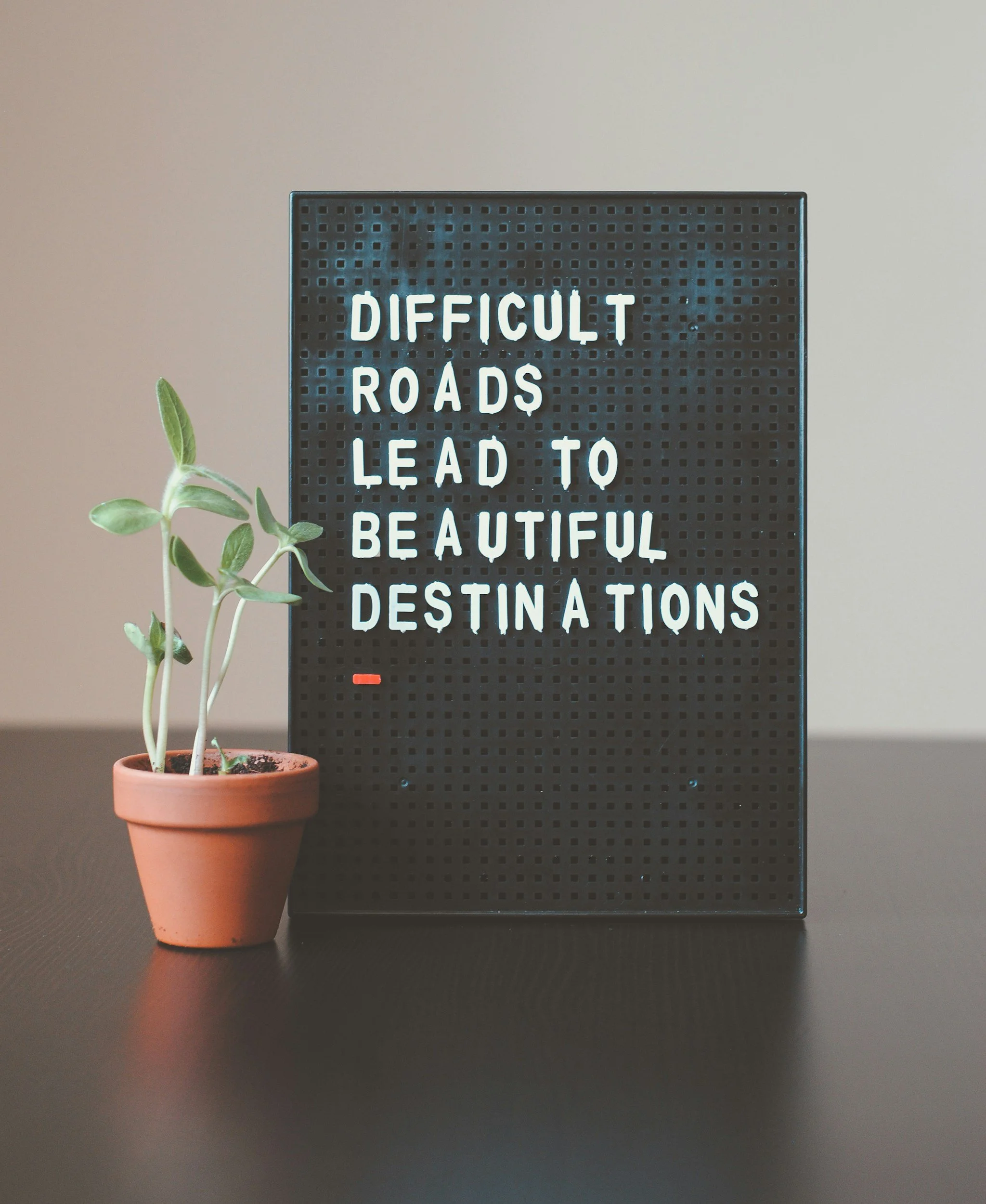
Rewiring the conditioned mind: Autonomic control and the biology of choice.
Physician and trauma expert Dr. Gabor Maté framed human development with a crucial distinction:
"We may not be responsible for the world that created our minds, but we can take responsibility for the mind with which we create our world."

The physical toll of poor boundaries: How saying "yes" strains your nervous system.
We often treat boundaries as an abstract emotional or relational exercise. But to your physiology, an crossed boundary is a direct physical event.Every time you say "yes" when your nervous system is screaming "no" (whether to taking on extra workload, tolerating disrespectful behaviour, or overcommitting your time) your brain interprets the overextension as a threat to your personal resources.

The biology of appreciation: rewiring the mind for daily joy.
Modern life is engineered around a subtle, persistent narrative: you need more to be complete. A newer car, a bigger home, the next milestone. Yet biologically, no matter how much we acquire, our nervous system adapts to it almost instantly (a psychological phenomenon known as hedonic adaptation).

The physiology of thoughts: Price Pritchett’s 5 Cs of negative thinking.
We often treat our thoughts as abstract, floating ideas. But to your nervous system, a thought is a physical event. Every time your mind fixates on a grievance, imagines a disaster, or loops on a worry, your brain fires neural pathways that cascade into physical signals: a spike in cortisol, a shift into sympathetic ("fight-or-flight") drive, a drop in heart rate variability, and immediate muscle tension.